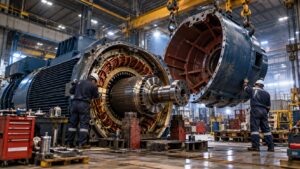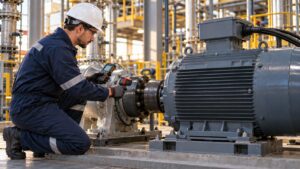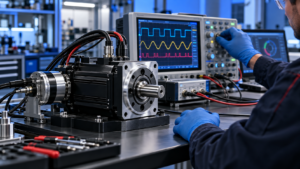
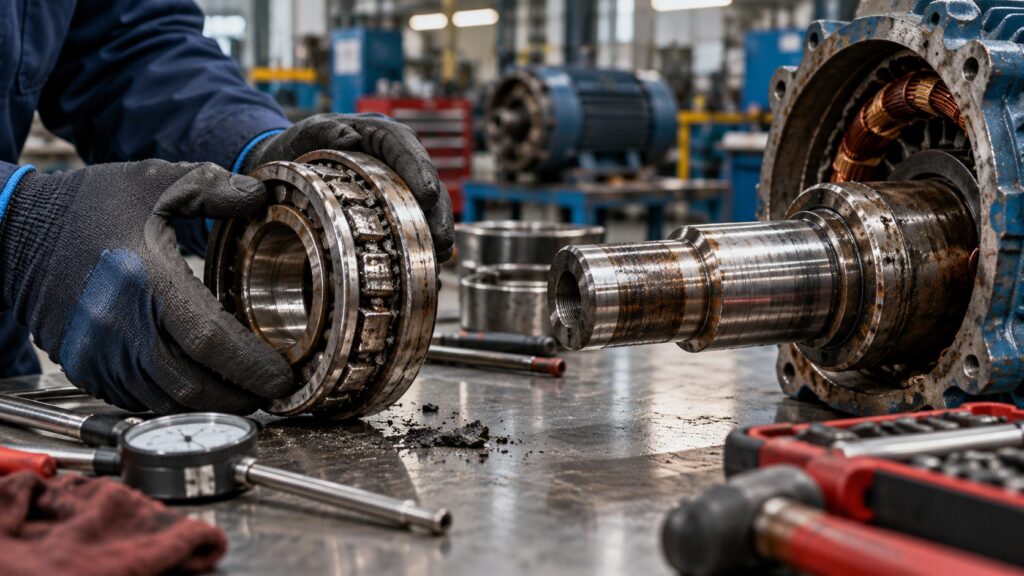
Motor bearings carry the rotating assembly and keep the shaft running in the correct position. When a bearing begins to fail, the first symptoms may look minor, but continued operation can damage the shaft, bearing housings, rotor, stator, and connected equipment. Catching the problem early can turn a major outage into a planned mechanical repair.
1. Vibration levels are increasing
A steady rise in overall vibration or a new frequency pattern is often the earliest measurable warning. Record readings at the same load and operating condition so trends are meaningful.
2. Rumbling, grinding, or clicking sounds appear
Healthy bearings should run smoothly. Rough mechanical noise can indicate surface damage, contamination, looseness, or insufficient lubrication. A mechanic’s stethoscope or vibration analysis can help locate the source.
3. The bearing housing runs hot
Excessive temperature may come from too much or too little grease, the wrong lubricant, overload, misalignment, tight fits, or internal bearing damage. Compare both ends of the motor and evaluate temperature trends.
4. Grease is leaking or discolored
Grease pushed past seals, contaminated lubricant, or dark metallic material can reveal improper lubrication, overheating, water entry, or wear. Simply adding more grease may make the problem worse.
5. Motor current rises without a load change
Mechanical drag from a failing bearing can increase the current required to turn the shaft. Electrical imbalance and driven-equipment problems must also be ruled out.
6. The shaft has movement or excessive endplay
Radial play, axial movement, or visible shaft instability can indicate worn bearings, damaged fits, or issues with the bearing arrangement. Running in this condition risks rotor-to-stator contact.
7. Alignment problems keep returning
If coupling alignment repeatedly shifts, inspect the motor feet, base, shaft, bearing housings, and fits. Soft foot, looseness, or worn components can cause repeated bearing failures even after a new bearing is installed.
Common causes of bearing failure
Frequent root causes include incorrect lubrication, contamination, shaft currents and electrical fluting, misalignment, belt over-tension, overload, improper installation, and out-of-tolerance shaft or housing fits. Replacing the bearing without correcting the cause usually leads to another failure.
What a complete inspection should cover
A professional evaluation may include vibration and temperature review, shaft runout, bearing-seat measurements, housing fits, seals, lubricant condition, coupling alignment, and electrical checks. The motor should be tested after repair to confirm smooth operation.
Need help with a noisy or vibrating motor? USA Motor Repair provides bearing replacement, shaft and housing repair, alignment checks, and complete mechanical rebuilds. Call (909) 247-3610 for support and nationwide pickup options.