The commutator is one of the most important wear components in a DC motor. It transfers current between the stationary brushes and the rotating armature, so its surface condition directly affects performance, brush life, temperature, and reliability. The right repair depends on the depth of damage and the condition of the complete armature.
Warning signs of commutator trouble
Heavy arcing, rapid brush wear, grooved copper, uneven color, vibration, excessive heat, and carbon tracking are common signs that the commutator needs attention. Operators may also notice unstable speed, reduced torque, or a strong electrical smell.
When resurfacing is appropriate
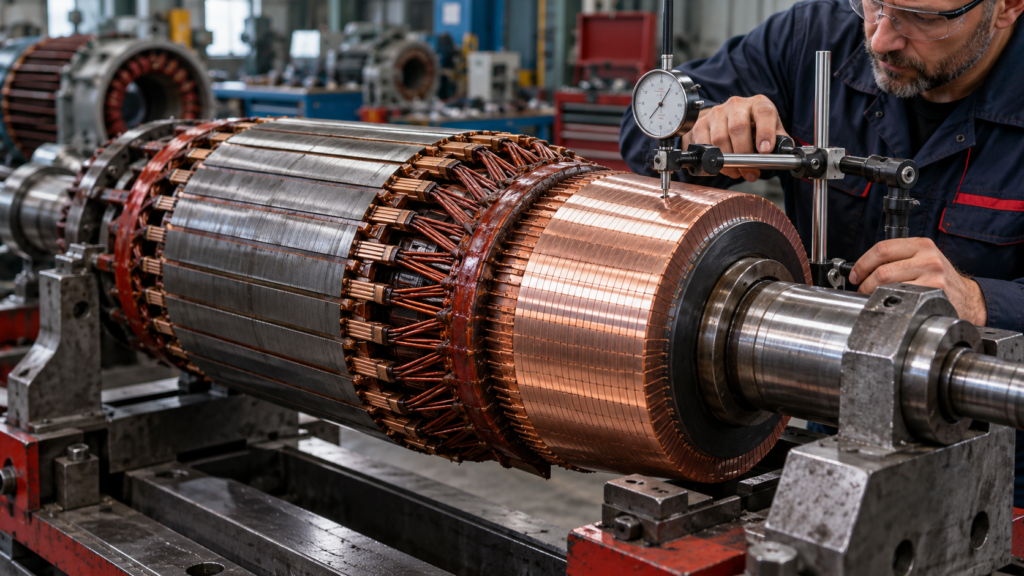
Light wear, shallow grooves, minor glazing, and moderate out-of-round conditions can often be corrected by machining the commutator. After turning, the mica should be undercut where required, edges chamfered, and the surface finished to the correct texture for proper brush seating.
Resurfacing is only appropriate when there is enough copper remaining and the bars, risers, insulation, and internal structure are sound. Measurements should be recorded before material is removed.
When a rebuild may be required
Loose bars, failed insulation, damaged risers, severe contamination, or internal movement can require a more extensive commutator rebuild. This work must preserve bar spacing, electrical connections, mechanical strength, and concentricity. Armature winding condition should be evaluated at the same time.
When replacement is the safer choice
A replacement commutator may be needed when damage is too deep for machining, the copper is below its minimum diameter, multiple bars are cracked or burned, or the structure cannot be restored reliably. The decision should consider motor duty, replacement-part availability, turnaround requirements, and the condition of the rest of the armature.
Do not evaluate the commutator alone
Commutator damage often has another cause. A complete DC motor inspection should include armature tests, field and interpole checks, brush grade and spring pressure, brush-holder alignment, bearings, shaft fits, balance, ventilation, and load conditions. Installing brushes on a damaged or misaligned system will not solve the underlying problem.
Testing after repair
After mechanical and electrical work, the armature should be checked for runout and balance, and the motor should undergo appropriate no-load and electrical tests. Correct brush seating and neutral adjustment help reduce arcing when the motor returns to service.
Need a DC motor or armature evaluated? USA Motor Repair handles commutator machining, armature testing, rewinding, balancing, bearing repair, and complete DC motor rebuilds. Call (909) 247-3610 to plan your repair and nationwide pickup.