A sudden failure of a large industrial motor can stop an entire process. The first decisions made after the shutdown affect safety, repair cost, and turnaround time. A calm, documented response gives the repair team better information and helps prevent additional damage.
1. Stop and secure the equipment safely
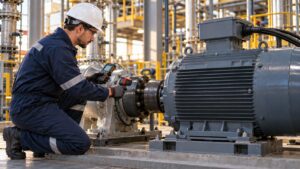
Follow the facility’s lockout/tagout procedure and verify that stored mechanical and electrical energy has been controlled. Do not approach or disconnect equipment until qualified personnel confirm that it is safe.
2. Record what happened
Capture drive or protection-relay fault codes, load, speed, current, temperature, vibration, noise, smoke, odor, and the sequence of events. Take photos of connections and coupling positions before disassembly. These details may disappear once the motor is moved.
3. Avoid repeated restart attempts
Repeatedly energizing a failed motor can increase winding damage, burn the core, damage the rotor, or create a safety hazard. If the cause is unknown, keep the unit offline until it has been assessed.
4. Inspect the driven equipment
A locked pump, fan, gearbox, compressor, or coupling problem can overload the motor. Verify that the driven machine turns as expected and document any mechanical failure so the same condition does not damage the repaired motor.
5. Preserve failed parts and data
Do not discard bearings, broken leads, coupling components, or protection data. The failure pattern can reveal lubrication, alignment, contamination, electrical, or operating problems that must be corrected before startup.
Information that speeds the repair quote
Provide clear nameplate photos, horsepower, voltage, speed, frame, enclosure, application, site location, lifting constraints, and required return date. Include overall dimensions and shaft details when transportation or replacement evaluation is urgent.
What an emergency repair workflow should include
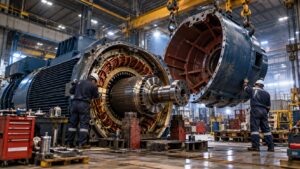
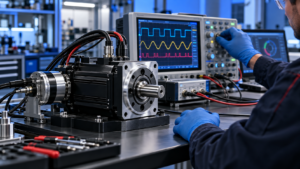
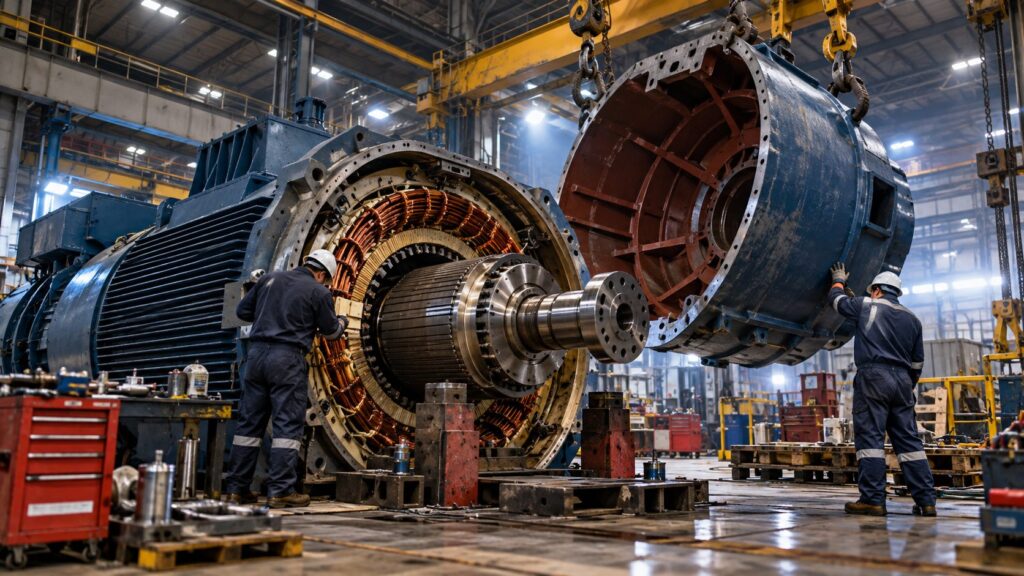
A disciplined process documents incoming condition, performs electrical and mechanical tests, identifies the probable failure cause, and gives the customer a defined scope and quote. After approval, the motor is repaired, tested, documented, and prepared for return shipment. Communication at each stage is as important as the shop work.
Plan the logistics early
Large motors may require special trucks, cranes, rigging, blocking, and weather protection. Confirm pickup access, weight, lifting points, and receiving hours as soon as the failure is reported. Good logistics planning can save valuable hours.
Critical motor down? USA Motor Repair provides emergency industrial motor diagnostics, rewinding, mechanical repair, testing, and nationwide pickup coordination. Call (909) 247-3610 with the motor data and location so the response can begin.